

How transactions move
Follow a Conceal transaction from a wallet to the mempool, a block, and confirmations.
A wallet and a node do different jobs. The wallet holds the keys. It builds and signs a transaction locally. A node validates and relays the signed transaction, but does not need the sender's mnemonic seed or private spend key.
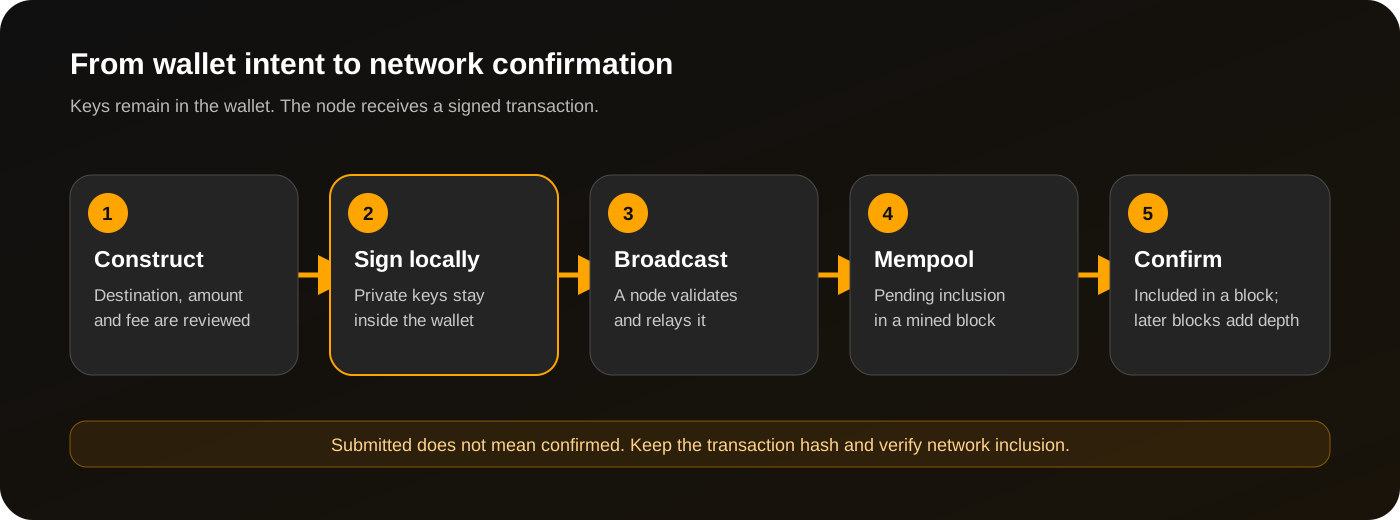
The lifecycle
- Construct. The wallet selects available funds, the destination, an amount, and a fee. Review the destination and amount on the signing device.
- Sign locally. The wallet authorizes the transaction with private key material. A legitimate node or explorer does not need your mnemonic seed or private spend key.
- Broadcast. The wallet sends the signed transaction to a Conceal node. Broadcast success means the node accepted it for processing; it is not yet a confirmation.
- Mempool. Valid pending transactions wait for a miner to include them in a block. A transaction can be delayed or rejected, so retain its transaction hash and check its state.
- Block and confirmations. The first containing block gives the transaction its first confirmation. Each later block increases the confirmation count. The receiving service decides how many confirmations it requires.
What the explorer can tell you
Search the Conceal explorer with the transaction hash when the wallet provides one. The explorer can help confirm whether the network has seen the transaction, its containing block, and its confirmation progress.
Explorer data is a view of network state, not wallet authority. It cannot recover a wallet, reverse a transfer, prove who controls an address, or replace the recipient's own acceptance checks. A missing result can mean the transaction has not propagated, the explorer is delayed, the hash is wrong, or the wallet never completed broadcast.
Privacy and disclosure
Conceal uses privacy-preserving cryptography, but day-to-day behaviour can still reveal information. Reusing addresses, posting transaction hashes with identifying context, exposing wallet RPC, sharing logs, or correlating timing across services can weaken privacy.
Never publish a mnemonic seed, private spend key, wallet password, or unredacted wallet export. A support agent needs the symptom, software version, transaction hash when appropriate, and sanitized logs. They do not need recovery secrets.
If a transaction appears stuck
- Confirm the wallet is connected to a synchronized node.
- Record the transaction hash, wallet version, submission time, destination network, and exact status text.
- Search the explorer without sharing private wallet data.
- Wait for the recipient's stated confirmation threshold; do not send a duplicate simply because confirmation is not immediate.
- If the transaction remains missing or rejected, follow Troubleshooting and provide sanitized evidence through an official support channel.